The 3 Essential Requirements of a Smart Factory: Paperless, Connected, Real-time
I see the same story in metalworking shops: the ERP arrives, the MES follows, and the dashboards still are not trusted. Three building blocks separate digitalization that works from digitalization that frustrates: paperless, connected, and real-time.
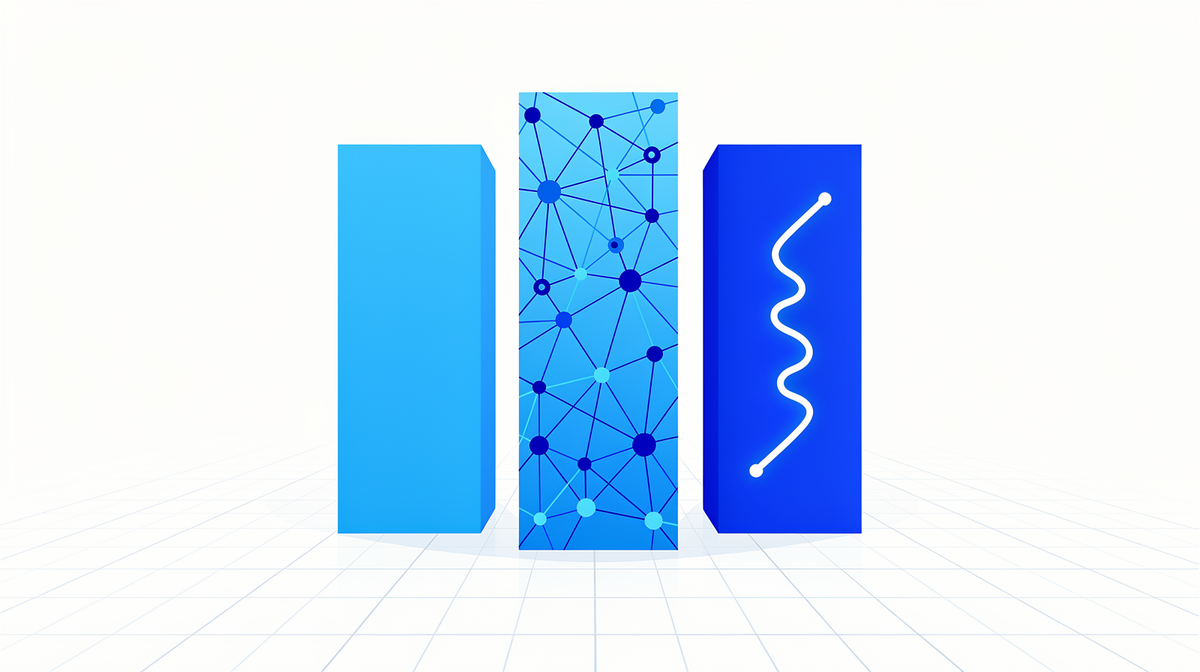
Many metal companies invest in digitalization but miss results because three building blocks are missing.
I see the same story often. A company spends real money. An ERP arrives. Then an MES. Dashboards in the office. Apps on the shop floor. Everything seems to head the right way.
But the dashboards still aren't trusted. Planning falls behind the facts the moment machine data needs reading in. Skilled workers find the apps too slow and go back to paper. It feels like you're still working in the dark, despite all the systems.
Do you recognize this? You're not alone. Many digitalization projects in metalworking get stuck here. It's rarely the budget or the software. It's the lack of one or more of three essential elements.
These building blocks are so central to my work that they form the tagline of my consultancy: Paperless, Connected, and Real-time.
This article is for you if you're responsible for digitalization in your metalworking company, whether you're a production manager, operations director, or family-business owner. If you're struggling with systems that promise but don't deliver, and feel like you invest more than you get back.
I'll show you why these three separate digitalization that works from digitalization that frustrates, and how to implement them.
Why these three building blocks are the key
I've watched many digitalization projects up close, from family-owned metal companies to specialized suppliers. The same pattern is always there.
The projects that succeed have three things in common. They work completely paperless. Every system is connected. And they work real-time. All three, fully. Not two out of three.
The projects that get stuck always miss at least one. That one gap undermines the whole digital strategy, however small it seems.
Get these three in order and everything that follows becomes smoother. Building apps becomes simple. Dashboards work as intended. People start using and trusting your systems.
Building Block 1: Paperless, where data-driven work begins
The best metalworking companies get this: your shop floor and office must be driven by data, not paper.
"What you don't record digitally, you can't improve."
Paper is the enemy of digitalization. Some say paperless isn't the goal in itself, but paper is a symptom of a digital system that isn't working yet.
Paper gets lost the moment you need it. It's used once and thrown away. It doesn't feed back into your systems. It's outdated by the time you use it. And it keeps knowledge trapped in drawers no one looks at.
An example I saw recently. An experienced welding operator found a parameter setting that worked perfectly for a recurring customer, saving a lot of setup time. He noted it on the back of a work order. That work order disappeared into administration. Later, another operator got the same order and had to reinvent the wheel. Frustration, lost time, missed opportunities.
Now imagine that discovery recorded digitally. Linked to that customer and order type. Automatically available to every operator doing similar work, with photos and videos if that helps. That's the power of truly paperless working.
Modern companies record everything digitally. An operator scans a QR code and sees all instructions, improvements from previous runs, and warnings for that order. A quality check on a tablet is analyzed automatically for trends, so problems get caught before they arise. A malfunction is reported digitally with photos and reaches maintenance within seconds, with all machine data and history.
Every action becomes a learning moment. Every decision becomes better informed. Every deviation becomes a step forward instead of a problem that repeats. The same goes for time registration, production output, and quality registration.
Building Block 2: Connected, systems that work together
This is where the real magic happens. Your systems must talk to each other. It's the big promise of Industry 4.0. Where we once had separate systems and machines, we now connect the whole business: machines, operator apps, inventory management, supplier systems, ERP, MES, PLM, and more.
Without connection, data lives in silos. And in silos you can't optimize, learn, or adjust at the level company-wide improvement needs. Without context your data isn't usable, and you only get context by combining the plan (ERP, CAD, PDM) with the result (MES) and machine data (IoT).
Most companies struggle with systems that work separately. Your ERP doesn't know what your machines are doing. Your MES is separate from planning. CAD changes reach the shop floor manually. Operator apps can't exchange data. Every manual transfer creates errors and delays.
Modern companies connect everything via modern protocols. Machines communicate via MQTT and OPC UA. Business systems share data via APIs. All information flows to one central historian in your Unified Namespace, available real-time for every application.
The result is powerful. Your systems finally work together as extensions of each other, and your data gets context because it's connected to other sources. Decisions come from the complete picture instead of pieces.
Connected systems create intelligence through collaboration. But every link in the chain must be able to communicate. From machine to management. From sensor to system. From data to decision.
Building Block 3: Real-time, responding to what's happening now
This is where the real competitive advantage arises. Your systems must be built on events and live data, because in a world that moves ever faster, timing is everything.
"Modern manufacturing means steering on events, not on reports."
Most companies work with delayed information. You can build a nice ERP dashboard in Power BI, but it updates at most once an hour. By the time you see a problem, you're an hour or two late.
What you want are real-time events. Signals. Alerts. Teams messages. You want to see things immediately, as close to the source as possible. An order starts deviating? Immediate notification. Scrap or productivity gets out of line? Immediate warning. An urgent order comes in? All stakeholders know at once. Material at the laser runs out? Create a new order immediately.
Imagine everything working real-time. Instead of discovering in tomorrow's report that a machine deviated, you get an immediate warning. The welder adjusts right away with concrete instructions. Maintenance is informed automatically via Teams with all the data. And planning can switch immediately.
Or take an urgent customer order arriving while production is already full. Instead of hours of calling and searching, the order triggers an event. Your planning app gets a signal, checks capacity, and proposes a solution within minutes. All stakeholders receive a Teams message with the new planning.
Real-time systems respond to what's happening, not to what's being reported. They bring information directly to the people who can act on it, as close as possible to where it happens.
Why two out of three doesn't work
This is where most digitalization projects stumble. They get two of the three reasonably in order and miss the third.
Paperless and connected, but not real-time? Your systems are digital and connected, but information comes in too slowly. By the time the dashboard updates, the situation has changed. Operators lose trust. Planners decide on outdated information. Few people on the shop floor still look at it.
Connected and real-time, but not paperless? Your systems are fast and connected, but important shop floor information still disappears into paper notes and is never recorded. You miss feedback. You can't learn from deviations.
Paperless and real-time, but not connected? You work digitally and quickly, but each system stands on its own. Data stays trapped in separate applications. You get data islands. No one has the complete overview.
In short:
- Paperless + Real-time: "Isolated speed"
- Connected + Real-time: "Fast data islands"
- Paperless + Connected: "Slow digital systems"
- All 3 in order? "Digital Intelligence" - the holy grail.
How to get started
You don't have to change everything at once. Start with one process and expand step by step.
Start small but do it well. Choose one department or one recurring order and make it completely paperless, connected, and real-time. Learn from what you see. Adjust where needed. Let your people get used to the new way of working.
A practical way to experience this is a tool like Eryxon, a shop floor app built for job shops where operators track jobs on tablets in real-time. It connects to your ERP via REST API, and because the code is open and free to self-host, you can spin it up on your own server and see what paperless, connected, real-time actually feels like before committing to anything bigger.
When that runs smoothly, expand to similar processes, then to other parts of your company. Each step builds on the previous one and becomes easier because the foundation is already there.
Invest in knowledge and training. Not just the technical side, but understanding of how these building blocks work together and why they're all necessary. Your digital strategy is only as good as what you know.
"Think in events, not in reports."
Train your people to respond to what's happening, not to what's being reported. That's the difference between modern production and administrative aftermath.
From frustration to results
Digitalization doesn't have to be frustrating, or an expense you get little back from. With the right building blocks it becomes a powerful tool that makes your company more agile, smarter, and more competitive.
I regularly see companies finally make the breakthrough they were looking for. Not because they spend more on software, but because they finally understand what it's really about.
"It's about structure, not software."
It's about ownership of your data instead of dependency on vendors. Intelligence from connection instead of island solutions that work against each other.
Implement these three building blocks, paperless, connected, and real-time, and you finally gain control. You switch faster than the competition. You anticipate changes better. You improve where needed. You strengthen your market position.
But you have to start with the right foundation.
Ready for personal advice?
Want to know how these three building blocks fit your situation? As a Smart Factory Architect, I help sheet metal companies set up their systems so they actually work.
I wrote about this before:

I wrote about this before: