Digitalization Is Not a Department, It Is Your Right to Exist
Digitalization is not an IT hobby, it is your most important differentiator. I answer the five UNS questions that land in my inbox most often, from old machines to transactional data.
Over the past few weeks I received a striking number of questions about the Unified Namespace (UNS).
What stood out?
Many business owners now understand the concept, but there is a strong tension around the question "how exactly?"
The most frequently asked question was:
"Luke, it sounds great in theory, but who do I call when things go down? What should I actually do tomorrow?"
That question exposes the exact sore spot.
In manufacturing we have grown accustomed to calling an external party for every problem and pulling a ready-made package off the shelf.
But a UNS does not sit on a shelf. It is not a product, it is a learning process and a fundamental architecture decision. In my in-depth UNS newsletter I wrote extensively about this.
The biggest mistake: the "Digital Loner"
Several companies point to a single person who is supposed to 'do something with digitalization'. That is a recipe for stagnation. I wrote earlier about why every manufacturing company needs a Chief Software Officer, and that is about exactly this problem.
Digital transformation is not an IT hobby. It is the most important differentiator for your company.
When you place the responsibility on a single person, you imply that the rest of the organization has nothing to do with it. That is a big mistake.
At some point you hit a physical limit with your machines and your people. You cannot cram more hours into a day. The only path to more efficiency, speed and visibility is digital.
You cannot just 'do this on the side'. And if you want to understand why digital transformation fails so often, this is precisely the reason: it gets treated as a side project instead of the core of your strategy.
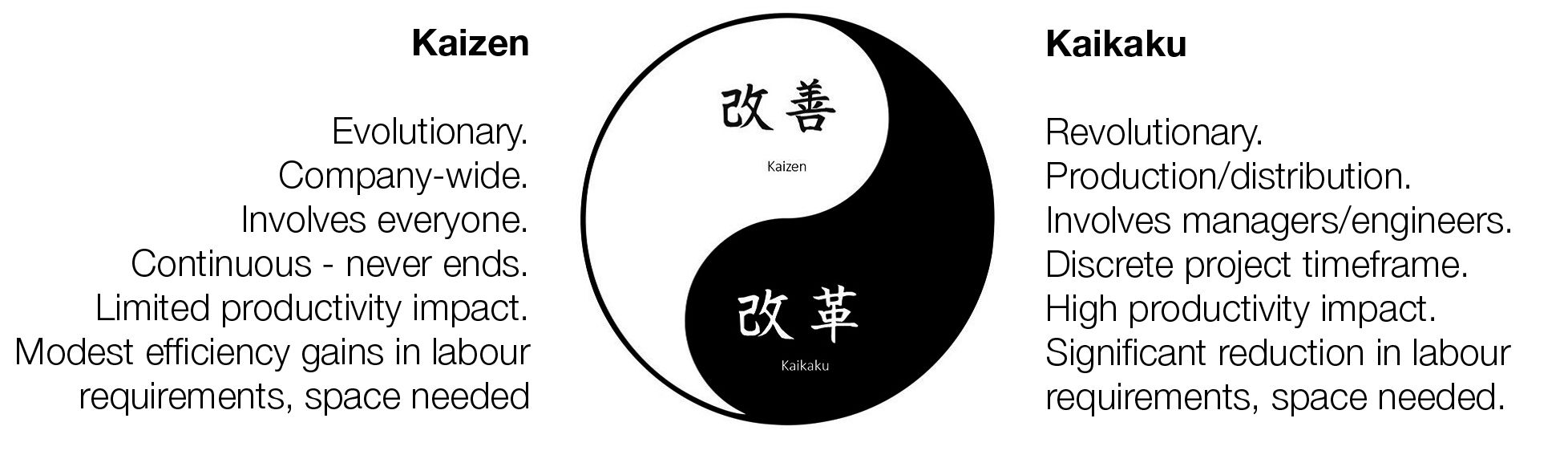
Source: processonline
A Kaikaku breakthrough: Breaking free from decades-old thinking
We need to stop thinking in small, conservative steps (Kaizen). If you truly want grip on your factory, you need a radical breakthrough (Kaikaku).
Lighthouse projects represent that leap:
- Not this: Endless advisory reports or multi-year transformation programs.
- This instead: Build a scalable solution (Proof of Concept) in weeks that actually works.
The UNS is the opportunity to push through and finally solve the problems we have been dreaming about for decades. It is the way to capture that enormous body of knowledge that still "floats in the air", in operators' heads or obscure spreadsheets, and make it usable for everyone.
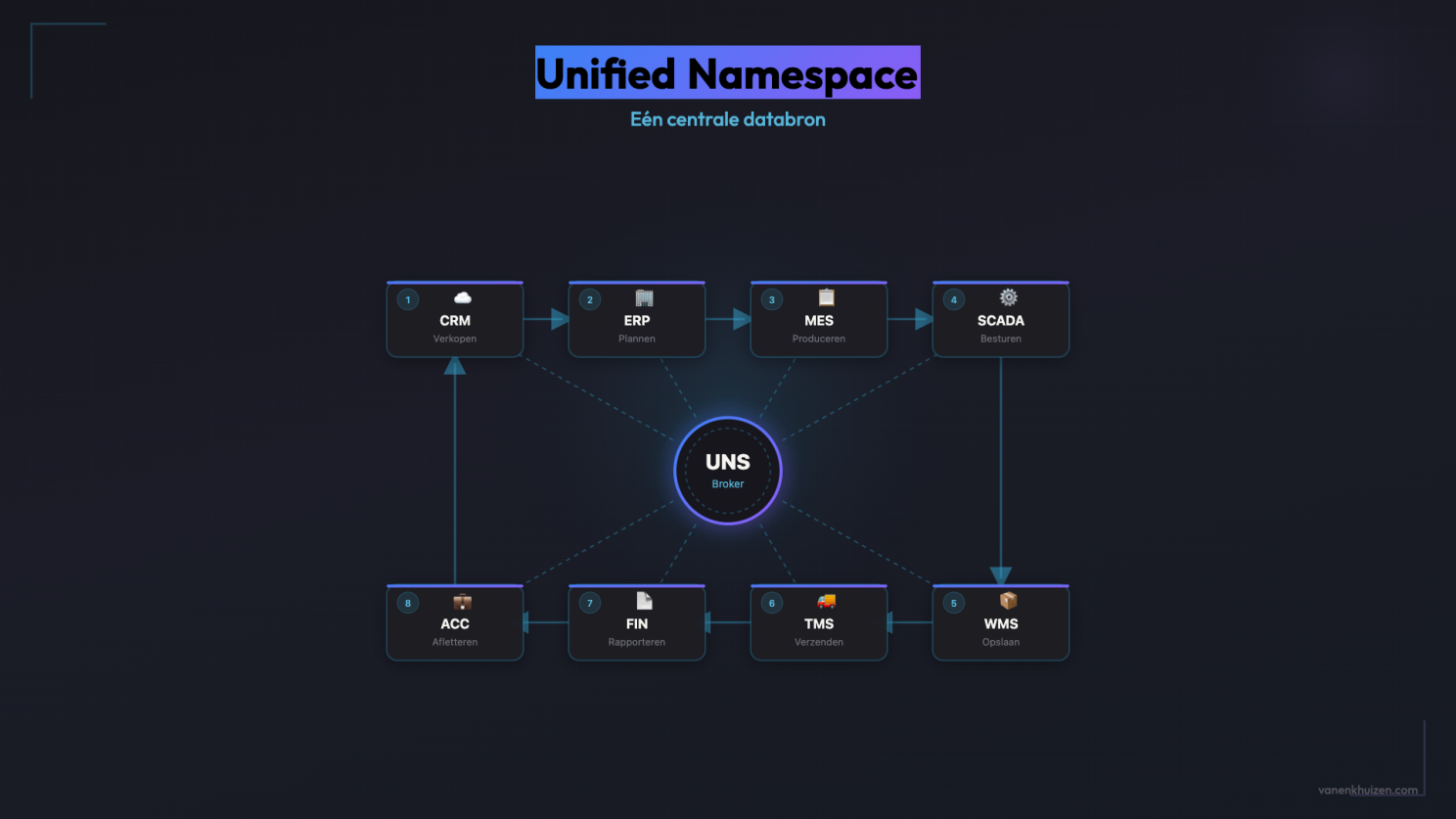
Five questions from the field
Here are the 5 most pressing insights from my inbox, translated to the shop floor:
Hierover schreef ik eerder:

1. Is a UNS only for machine data?
"Can I also put my revenue versus budget versus cost per customer in the UNS for dashboards? AI? Power BI?"
Technically anything is possible, but keep thinking logically. An ERP is built for historical financial data and invoicing. If that data already sits there properly, you do not need to force it out for a real-time hub.
The crux: You can connect databases (via API, SQL) directly to your ecosystem. That creates a Source of Truth for your analyses.
That is the holy grail for both your dashboards and modern AI applications. The UNS can also query data when needed with the right settings. The question is not "can it?" but "should it?", and that depends on how you handle the domain knowledge dilemma.
2. Can we also handle transactional data (orders, planning, SCSN)?
"We want more than just machine status. What do we do with orders?"
Absolutely. In fact: this is where the real gains are. Whether it is orders, bills of materials, receipts or even invoices, everything works perfectly event-driven. You can connect this with your accounting, your banking software or your supply chain (SCSN).
The result: You set up the infrastructure once and then benefit from real-time data exchange. That delivers the peace of mind and visibility every production leader craves.
3. "What do we do with our old machines that have no network connection?"
"My equipment is 20 years old, do I have to replace everything?"
This is often the biggest mental blocker, but in practice the smallest hurdle.
You do not need to replace your equipment for digitalization. With simple sensors or gateways you can unlock even that old laser cutter or milling machine. Never let 'old iron' be an excuse not to get your digital architecture in order.
4. "Isn't this only for the big players?"
"Don't I need a massive IT budget for this?"
Definitely not. Precisely because we build with Open Source technology, this is more accessible than ever for SMEs.
You do not need to invest millions in licenses before you see the first results. You start small with a Lighthouse project, prove the value, and only then scale up.
5. Who fixes it when it breaks?
"Who do I call when the data flow stops?"
The answer is simple: Your own team. Of course you can bring in experts to lay the foundation, that helps you build momentum, but after that you need to manage it yourself.
Because you build with open standards, you are no longer dependent on an external party for every small change. With today's AI assistants, managing these stacks is far more accessible than the closed 'black box' systems of the past.
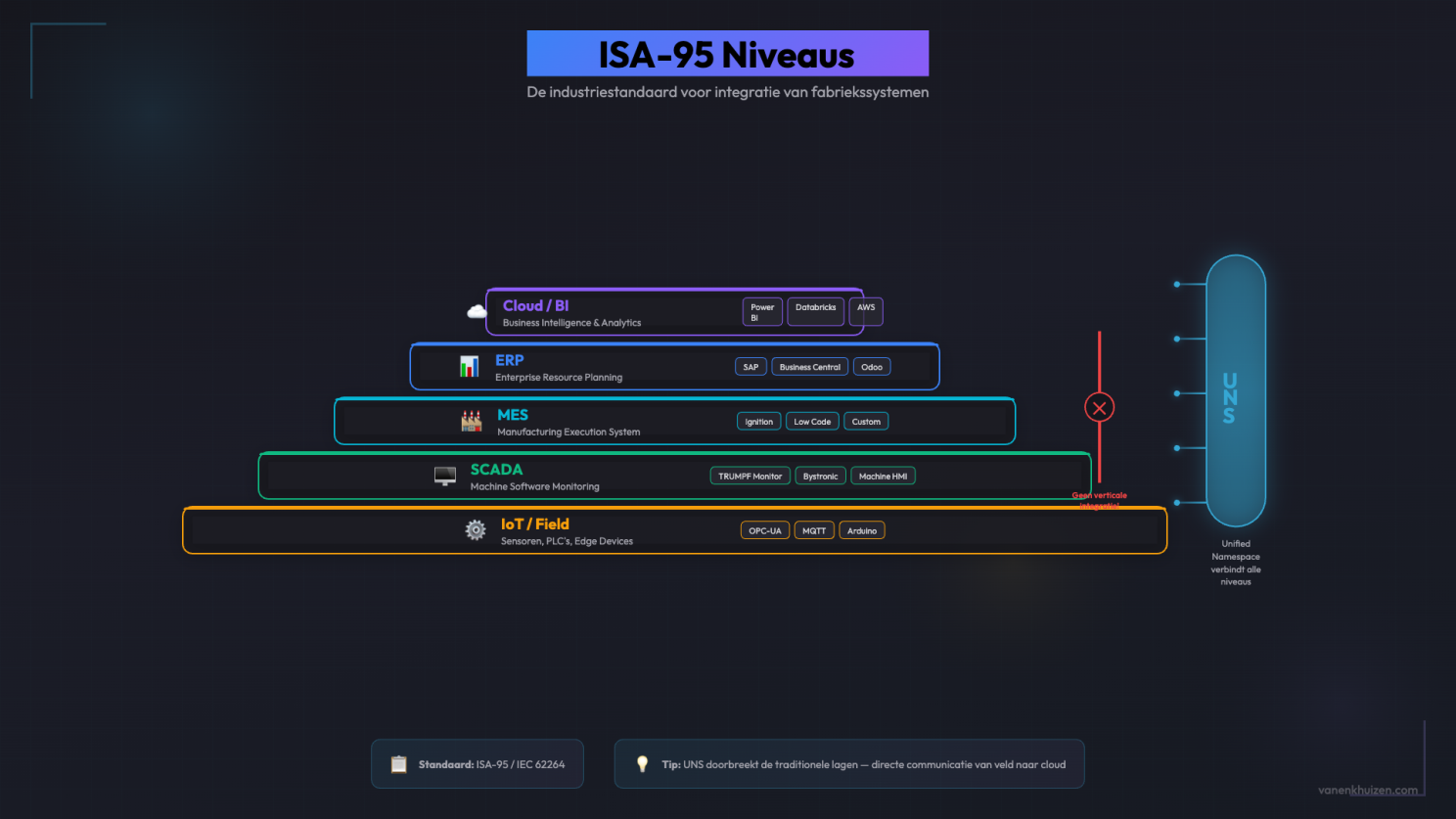
All systems come with connectors
Taking control: Become the architect of your own factory
We are moving to a clear hierarchy of data access:
- First the API.
- Then read the database directly.
- Can't do either? Then the system gets phased out.
If in 2026 you still have software that holds your data hostage, you simply have the wrong tools for Industry 4.0.
The future of manufacturing depends on our speed. If we capture the knowledge and take control of our own architecture, we can keep making, competing and growing.
Let us stop treating digitalization as a 'little project' and start seeing it as the core of your business.
Hierover schreef ik eerder: