Why ERP No Longer Needs to Be the Center of Your Factory
I spent years connecting ERP systems to real shop floors, and I watched custom work turn a strong system into a bottleneck. Here is the architecture that scales instead: a central source of real-time truth, with ERP handling orders and accounting while operations run on a lighter layer.
Ten years ago, I connected an ERP system to an MES for the first time: TRUMPF TruTops Fab, now known as Oseon. No magical middleware, no standard connectors. I thought it through and built it myself.
I wrote the requirements, tested the logic with hand-typed XML files, and worked with a custom consultant from the ERP platform. We used Ridder iQ, modern and flexible, and I had a strong developer on the other side.
It worked surprisingly well. Well enough to improve the company where I worked and then build my career as a consultant. Since then I've helped dozens of companies with Ridder iQ, TRUMPF Oseon/Boost, and custom shop floor apps.
Where many companies stand now
Almost ten years later, many companies still work the same way.
Some have just started with their first or new ERP. MES or integrations are still in their infancy. Others are mid-project or at the start of a major trajectory.
Most manufacturers are halfway through their digital development toward a smart factory. About a third are truly well integrated. The rest run a mix of ERP, nesting, sometimes MES, and often a lot of paper and Excel.
Meanwhile complexity grows. More tools, more data, more software with every new machine. And the same question always comes up:
How do you keep control of your data when your landscape keeps growing?
What do you do with a structure that keeps getting more complex?
The limits of ERP as the center
ERP was once the central point of the digital factory. Everything about production went into it: work preparation, order statuses, planning, quality measurements, nesting, instructions.
I wrote about this before:
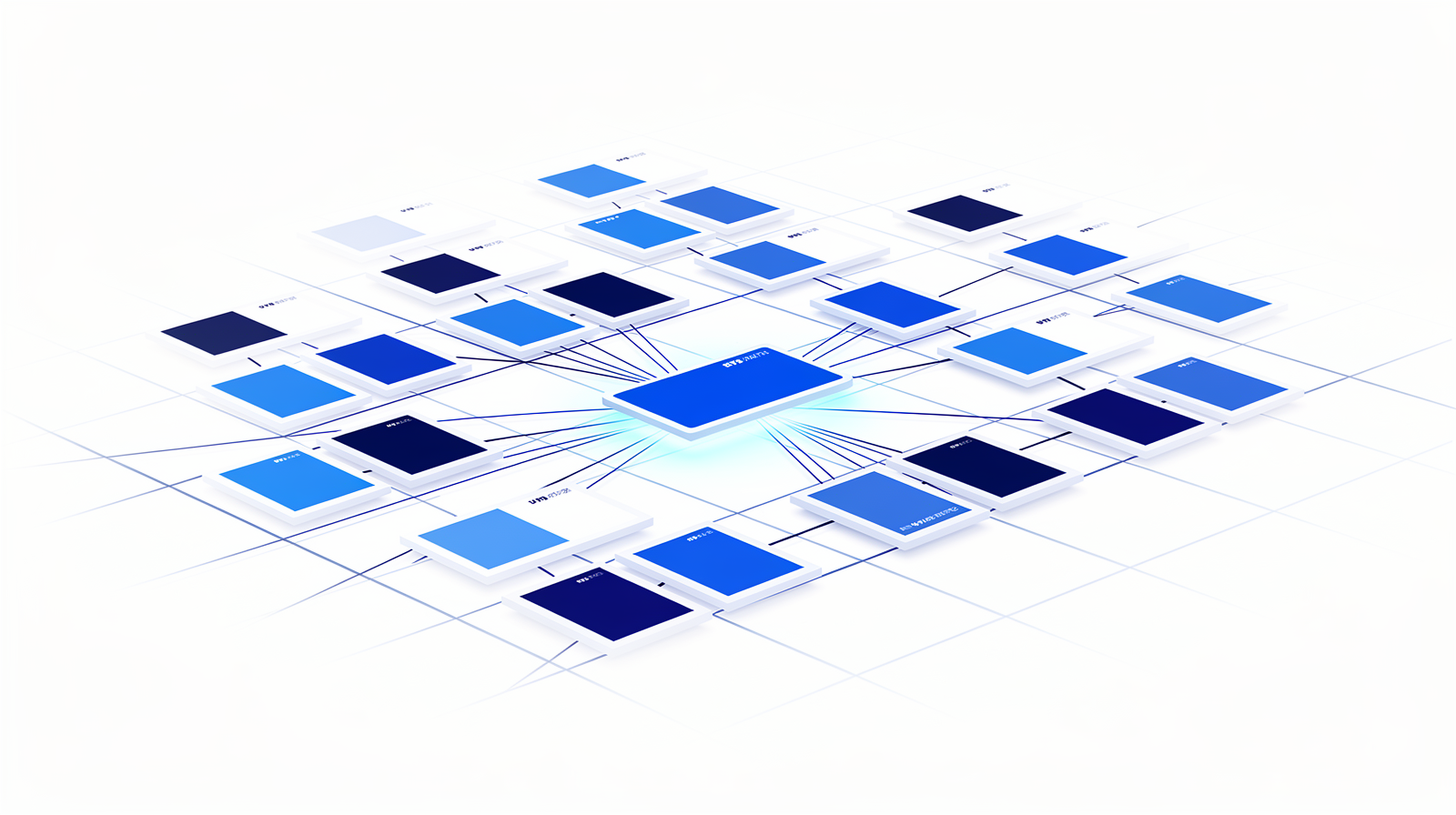
That worked back then. ERP was the only system you could customize, expand, and secure.
Not anymore. Now every machine has its own software. Multiple lasers from different brands, a press brake robot, a welding robot, maybe soon an AGV. Each with its own data and logic.
Yet much of that data still lands in ERP. Or worse: in Excel files, loose emails, manual workarounds.
I hear these questions from directors and production managers:
"Which ERP system should we choose?"
"Is this MES solution suitable for our factory?"
"Can we meet Industry 4.0 requirements with this machine?"
Fair questions. But they start from the wrong point.
Why custom work doesn't scale
Every expansion needs adjustments. New connections. Custom work in ERP. Testing. Hoping it survives an update.
So ERP becomes a bottleneck instead of a powerful center. Not because ERP is bad, but because it wasn't designed for:
- Real-time data processing
- Complex machine control and work instructions
- Complex, dynamic, visual dashboards
- Flexible integrations with dozens of subsystems
Push it anyway and the system turns sluggish and maintenance-sensitive.
Many larger SMEs want to do more with their data, especially from the shop floor, but hit technical limits. The data flows between ERP, MES, and other systems are cumbersome or fragmented.
They need structure, real-time insight, and overview. But the question remains:
Where do you start when your system landscape keeps expanding?
How do you stop your ERP from becoming a spaghetti system?
At some point replacing it feels impossible because everything is interwoven. And the price tag is substantial.
The route that does scale
What works instead?
Not another tool. Not more custom work in your ERP. A technical structure where systems are smartly connected and data is available where it's needed.
I call that a central source of real-time truth. Not a magical platform, but a solid way of thinking and building.
Your ERP still handles customer data, orders, and accounting. But your operations run on a lighter, more flexible layer.
That delivers:
- Fewer custom connections
- Faster integration of new tools
- Reliable and current data
- An ERP that becomes manageable again
- Ready for dashboards, AI, robotization
Without rebuilding everything.
Future-proofing starts with one thing:
Not with AI. Not with yet another new app.
But with one clear data structure.
What does this mean for your factory?
Maybe you've just started with ERP. Maybe you're already deep into MES, OEE, QRM, or other digitalization.
It doesn't matter.
The real question is this: are you actually changing how your factory runs, or just buying more things?
Further reading
- The 10 Best ERP Software for Metalworking, Independent comparison when you're still looking for a system
- ERP is Dead, Long Live ERP, The evolution of ERP's role in manufacturing
- MES for Metalworking: The Complete Guide, The function your ERP can't fulfill
- Introduction to Unified Namespace, The architecture behind decentralized thinking
Ready to get your architecture right?
I help metal manufacturers use Unified Namespace and AI to take control of their data, without depending on a single vendor. No sales pitch: just an honest conversation about what fits your situation.
Get in touch, no obligations
I wrote about this before: